

“An elderly man stands utterly bewildered. Before him, his business and home are smouldering, black smoke billows from the skeletal remains and an acrid smell pervades the April air. Beside him, his wife and daughters stand, staring in horror. They have lost everything. All that remains of their home is a gable wall with fireplaces hanging grotesquely in mid-air. All is dust. Black and twisted remnants of their lives are the only signs that they had ever lived there. Too traumatised to even cry, they stand, silent and uncomprehending.”
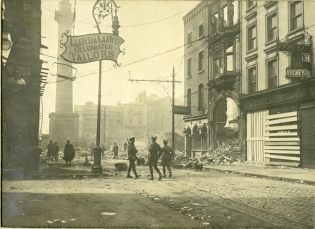
The family referred to above is mine, the gentleman my great grandfather. Easter week 1916 claimed his business and home. His once thriving tobacconists at 27 North Earl Street (close to the corner, across from the GPO) and his cigar stall in Westland Row station, were looted and wrecked. When the guns in the grounds of Trinity College were trained on Sackville Street, in an effort to oust the rebels from the GPO, the ensuing inferno destroyed blocks of businesses and homes in the surrounding area.
Afterwards, he tried to salvage his business but his creditors refused to provide new stock, and his insurance did not cover the extent of the damage. His claim for compensation to the British government took months to be processed and when paid was a pittance. Sadly, the insurance claim lists all of their belongings, including most poignantly for me, the wedding trousseau of my great aunt. But they were the lucky ones – they were unharmed. The family left North Earl Street and never returned. My great grandfather died three years later, his wife in 1920.
The centenary of 1916 was celebrated in Dublin and everywhere around the world where the Irish gather. There is no question that this was a turning point for a nation. It is sad, however, that it was written in the blood and anguish of so many. Five hundred people lost their lives during the Rebellion, including innocent civilians, unarmed policemen and British soldiers.
In the frenzy of nostalgic, and sometimes rose-tinted remembrance, it would be nice to spare a thought for those families who were thrown into the darkness of grief and despair, regardless of nationality or political belief. I will leave it to others to eulogise the men of 1916. I’d rather remember the forty families who lost their children during Easter week. I cannot begin to imagine what their pain must have been or that they found any consolation in the fact that their children died as innocent bystanders in the fight for Irish freedom.
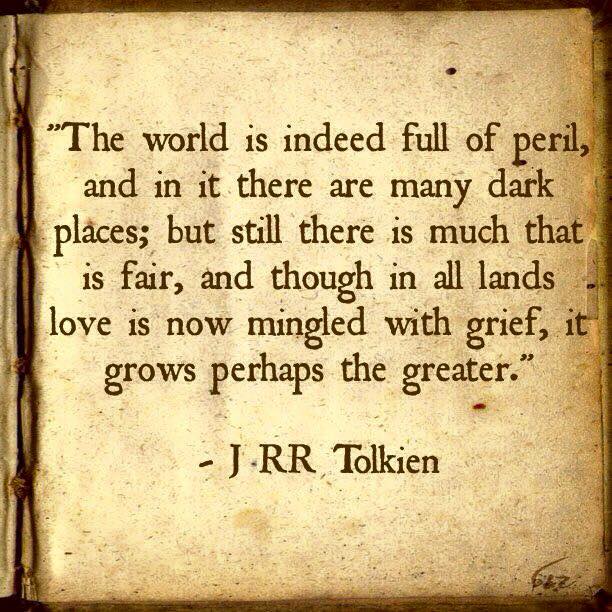
It is right to commemorate the birth of an independent nation; I just wish it had not cost the lives of so many. I’ll leave you with the words of Tolkien.


 Pam Lecky Books
Leave a comment